Flower Kit Box · Growing Guide
How to Grow a Wildflower Wedding Meadow
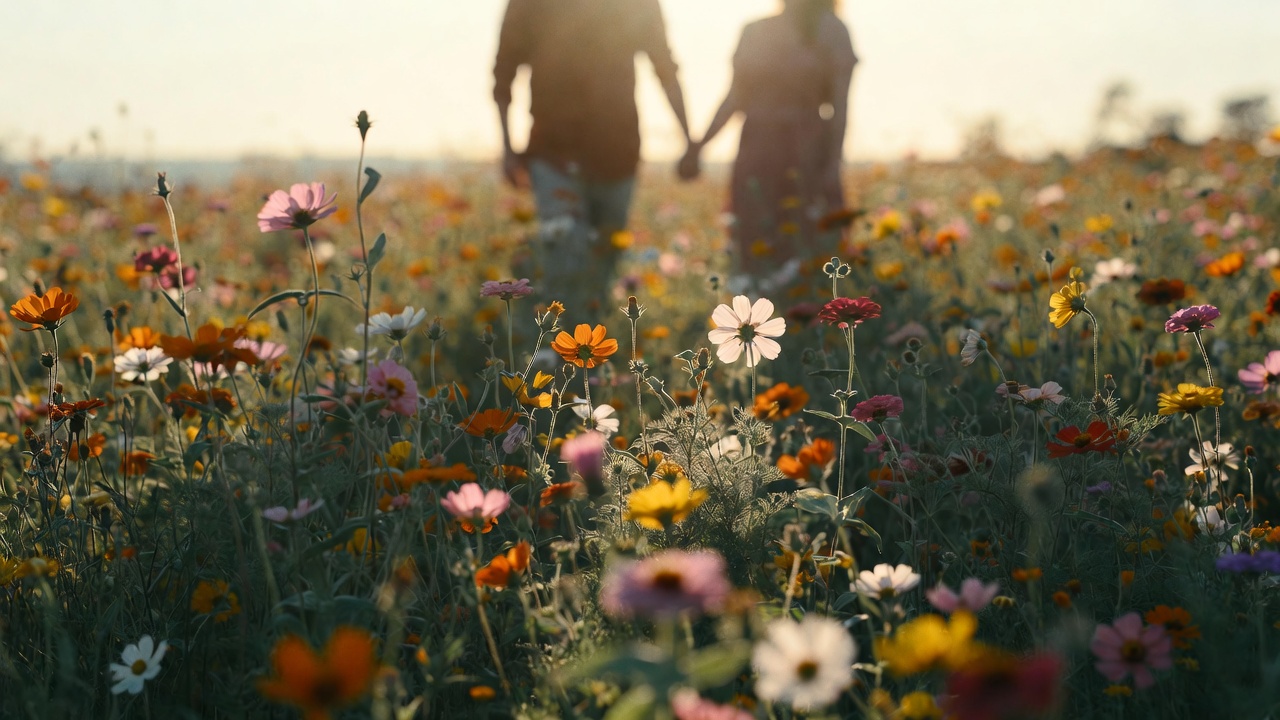
A wildflower meadow is one of the most romantic features you can give a wedding — and one of the most forgiving plantings in the gardening world. With the right timing, a sunny patch and one weekend of light work, anyone can grow a meadow in time for their wedding day. The meadow does need to be monitored as it grows — a few minutes most weeks to check moisture, weeds and progress — but the active work is concentrated up front. This guide walks through every stage, from picking your sowing window to caring for the meadow long after the last guest has gone home.
1. When to plant
Timing is the single most important decision in growing a wedding meadow. Plant too early and the bloom peaks before guests arrive. Plant too late and you stand in a green patch on the day. As a working rule, sow your wildflower seeds 10 to 14 weeks before the wedding in temperate climates. In hot Mediterranean and subtropical regions you can compress that window to 8 to 10 weeks; in cool northern regions stretch it to 14 to 16 weeks.
Wildflowers also have a sowing season, not just a growing window. In the Northern Hemisphere, most temperate species are sown between March and June for summer bloom, or in late August through September for an autumn-overwinter strategy. In the Southern Hemisphere, mirror that calendar — September through November for a December–February bloom.
For a precise window tied to your region and wedding date, use the regional planting calendar on the homepage.
2. Choosing your site
Wildflowers want what most weeds want: sun, modest soil and decent drainage. Pick the area on your venue that gets the most direct light through the day and avoid anywhere prone to standing water.
Sunlight
Aim for at least 6 hours of direct sun per day. A spot that gets full sun from late morning to evening is ideal. Patchy dappled shade (under high deciduous trees) will reduce flower density but still give a good display. Deep shade — under conifers, against north-facing walls — will not work.
Drainage
Wildflowers tolerate dry soil well and waterlogged soil badly. Avoid low spots where puddles linger after rain. If the only available area is heavy clay, work in a few centimetres of coarse sand or grit during soil prep.
Size
Match coverage to ambition. A 20 m² patch is enough for a single ceremony backdrop. 100 m² lines a full aisle. 500 m² transforms a lawn. 1,000 m² turns an estate into a meadow. The four Flower Kit Box sizes are pre-measured for these scales.
3. Preparing the soil
Soil prep is the most physical part of the process and the part that decides whether you get a meadow or a patchy lawn. The goal is a fine, level, weed-free seedbed.
Clear existing vegetation
Strip the area down to bare soil. Wildflower seedlings cannot compete with established grass or weeds. For a small site, lift turf with a spade. For a large site, cover the area in cardboard or black plastic for 4 to 6 weeks beforehand to kill the existing growth, then rake off the dead material.
Loosen and level
Loosen the top 10 cm of soil with a fork or rotavator. Break up clods, remove stones larger than a marble and rake the surface flat. The seedbed should look like the texture of cake crumbs, not chunks.
Do not fertilise
This is counter-intuitive but critical. Rich soil drives leafy growth at the expense of flowers, and feeds weeds faster than wildflowers. Skip the compost and the fertiliser entirely. Wildflowers evolved on poor soil and want to stay that way.
4. Sowing the seeds
Sowing is quick — a 100 m² area takes one person about 30 minutes. The seed in your Flower Kit Box is pre-measured for the coverage you bought, so you do not need to calculate rates.
Mix with sand for even coverage
Wildflower seed is fine and easy to clump. Mix the seed with roughly four parts dry sand to one part seed in a bucket. The sand acts as a carrier so you can see where you have already sown.
Sow in two passes
Walk the area scattering half the seed in one direction, then walk it again at right angles scattering the other half. This crosshatch sowing is the simplest way to avoid bald spots and stripes.
Press in, do not bury
Wildflower seed needs light to germinate, so resist the urge to rake it under. Instead, walk the area or roll it lightly with a garden roller (or a flat board) to press the seed into contact with the soil. Birds will take a small percentage — that is normal and accounted for in your seed rate.
5. Watering
Watering is the second most common reason wedding meadows fail. The risk is at both ends — too little in the first three weeks, too much later on.
Week 1 to 3: keep the seedbed damp
Water immediately after sowing using a fine spray — never a strong jet, which displaces seed. The seedbed should feel like a wrung-out sponge: damp to the touch, never sodden. In dry weather, mist once or twice a day. Germination usually starts in 10 to 14 days, with most species visible by day 21.
Week 4 onwards: ease off
Once seedlings reach 5 cm tall, reduce watering to roughly once a week in the absence of rain, and water deeply rather than lightly. Deep, infrequent watering encourages roots to push down — meaning the meadow handles a heatwave on the wedding day far better.
Once flowering: only in drought
Established wildflowers in bloom rarely need watering at all. The only reason to water in the final fortnight is a multi-week dry spell where leaves are visibly wilting in the morning, not just in midday heat.
6. Caring for the meadow as it grows
A wildflower meadow is meant to look untamed, but in the first six weeks a small amount of intervention pays off enormously.
Pull obvious weeds early
For the first three weeks, hand-pull anything that is plainly a weed — dock, dandelion, thistle, bindweed. Leave anything you are not sure about; it is probably a wildflower seedling. Once the meadow knits together at around week six, it will outcompete most newcomers on its own.
Stay off the soil
Once seed is down, do not walk on the meadow until plants are well established. Foot traffic compacts the soil and snaps young stems. Lay a board across if you need to reach the centre for weeding.
Resist the urge to feed
Adding plant food at this stage will produce taller, leafier, less floriferous growth — and it will encourage weeds. Trust the meadow and the soil it was sown into.
7. Flowering and timing for the wedding day
Most species in our wildflower mixes — cornflower, cosmos, calendula, ammi, california poppy, flax — flower 8 to 12 weeks after sowing. The peak bloom window for any one mix is roughly two to three weeks. Your goal is to land your wedding day in the middle of that window.
Walking the meadow weekly
From week six, walk the edge of the meadow once a week and take a photograph from the same spot each time. This gives you an honest sense of how the bloom is progressing and lets you spot uneven coverage early enough to do something about it.
Slowing or speeding the bloom
If the meadow is running ahead of schedule (early bloom, hot summer), shaded netting and reduced watering will buy you a week. If it is running behind, a deep watering and a few warm days will usually catch it up. The meadow is more responsive to weather than gardeners expect.
The week of the wedding
Stop watering three days before the day so the meadow is dry underfoot. Do not mow paths until 24 hours before — fresh paths look crisp on the day. Keep dogs and small children out of the meadow during the final week.
8. After the wedding
What happens to the meadow afterwards is up to you, but the seeds it has set are valuable.
Let it set seed
Leave the meadow to flower out and form seedheads. The faded brown skeleton is not pretty for a few weeks, but it is the part that lets the meadow return next year.
Cut back in late autumn
Once seedheads have dried and dropped (usually 4 to 6 weeks after peak bloom), cut the meadow down to about 5 cm with a strimmer or scythe. Rake off and remove the cuttings — leaving them in place fertilises the soil, which encourages weeds.
Year two and beyond
Many of the species in our mixes are annuals or short-lived perennials that self-seed. With minimal intervention you will see a thinner but real bloom in year two, and the meadow can be topped up with a fresh sowing each spring to keep the display dense.
9. Troubleshooting common issues
Patchy or sparse germination
Almost always a watering issue. The seedbed dried out at some point in the first three weeks. Top-sow the bare patches with a small amount of seed (we send a reserve packet) and keep that area damp.
Lots of leaves, no flowers
The soil is too rich. There is no fix mid-season — but it tells you that a top-sow next year is wise, and a thinner soil patch should be chosen if you re-sow.
Yellowing leaves
Almost always overwatering, particularly in heavy soil. Stop watering for a week and let the area dry out. The plants will recover.
Weeds taking over
Hand-pull the worst offenders — dock, thistle, bindweed — at the root. Do not use weedkiller; it will kill the wildflowers too. If the area is genuinely overwhelmed, the soil prep was probably skipped or rushed; the only fix is to clear and re-sow next season.
Bloom is going to be late or early for the date
Email us. The earlier we know, the more options we have — shade cloth, deep watering, or a top-sow of fast-flowering species can usually rescue the timing.